
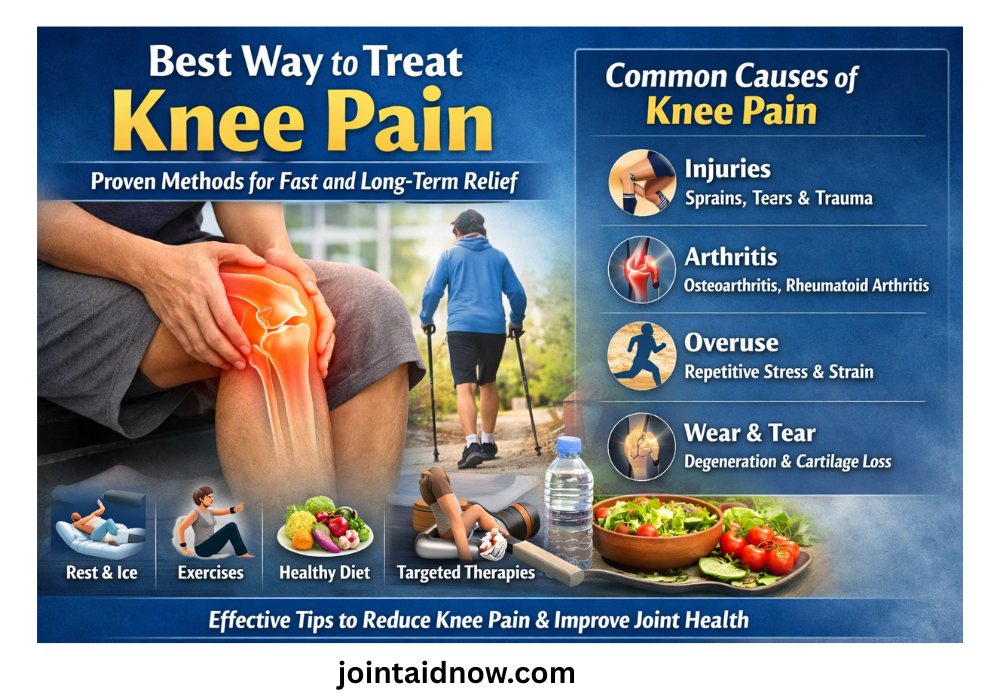
Best Way to Treat Knee Pain
Knee pain is one of the most common joint problems in the world. as well in USA. It affects young athletes, working adults and older people alike. For some, it starts as a mild discomfort after walking or climbing stairs. For others, it becomes a constant pain that limits movement and quality of life.
The knee is a complex joint that supports your body weight and allows movement. When it becomes injured, inflamed or worn down, even simple daily tasks can feel difficult.
The best way to treat knee pain is not just one method. It is usually a combination of rest, strengthening exercises, proper nutrition and targeted treatment. This guide explains the most effective and practical ways to reduce knee pain and improve joint health.
If your pain is mild, you can try simple remedies at home. Read our guide on how to treat knee pain at home for easy steps.
Common Causes of Knee Pain
Understanding the cause of knee pain is the first step toward treat knee pain best way.
1. Osteoarthritis
This is the most common cause of knee pain, especially in people over 40. It happens when the cartilage that cushions the joint gradually wears away, leading to stiffness, swelling and pain.
2. Injury
Knee injuries often occur during sports or accidents. Common injuries include:
- Ligament tears (ACL, MCL)
- Meniscus tears
- Fractures or dislocations
3. Overuse
Repeated stress on the knee from running, jumping, or heavy physical work can lead to inflammation and pain.
4. Excess Weight
Being overweight increases pressure on the knee joint. Over time, this can accelerate cartilage damage.
5. Inflammatory Conditions
Diseases like rheumatoid arthritis or gout can cause swelling and severe joint discomfort.
Best Ways to Treat Knee Pain
The most effective treatment plan usually combines several approaches. Here are the methods that doctors and therapists commonly recommend.
1. Rest and Activity Modification
If knee pain begins after physical activity or injury, rest is essential. Continuing the same activity can worsen the condition.
What to do
- Avoid activities that cause pain.
- Switch to low-impact exercises like swimming or cycling.
- Take short breaks if your job requires long periods of standing.
Rest helps reduce inflammation and allows the joint to recover.
2. Ice and Heat Therapy
Temperature therapy is one of the easiest and most effective treatments.
Ice therapy
Best for:
- Swelling
- Recent injuries
- Sharp pain
How to use:
- Apply ice for 15–20 minutes.
- Repeat 2–3 times daily.
Heat therapy
Best for:
- Stiffness
- Chronic pain
- Muscle tension
How to use:
- Apply a warm compress or heating pad.
- Use for 15–20 minutes.
Ice reduces inflammation, while heat improves circulation and relaxes muscles.
3. Strengthening Exercises
Weak muscles around the knee increase pressure on the joint. Strengthening these muscles provides better support and reduces pain.

Most effective knee-strengthening exercises
Straight leg raises
- Lie on your back.
- Keep one leg straight.
- Lift it slowly.
- Hold for 5 seconds.
- Repeat 10 times.
Wall sits
- Stand against a wall.
- Slide down into a sitting position.
- Hold for 10–20 seconds.
- Repeat 5 times.
Hamstring stretch
- Sit on the floor.
- Extend one leg.
- Reach toward your toes.
- Hold for 20 seconds.
These exercises improve joint stability and reduce strain on the knee.
4. Maintain a Healthy Weight
Excess weight puts significant stress on the knee joint.
Research shows:
- Every extra kilogram of body weight adds several kilograms of pressure on the knee during movement.
- Losing even 5–10% of body weight can reduce pain significantly.
Simple weight-loss tips
- Eat more vegetables and lean protein.
- Reduce sugary drinks and processed foods.
- Walk daily for at least 20–30 minutes.
Weight management is one of the most effective long-term solutions for knee pain.
5. Use Supportive Devices
Supportive tools can reduce pressure and improve stability.
Helpful options
- Knee braces
- Compression sleeves
- Orthopedic shoe inserts
- Walking sticks for severe pain
These devices help align the joint and reduce stress during movement.
6. Natural Remedies for Knee Pain
Natural treatments can help reduce inflammation and support joint health.
Turmeric
Contains curcumin, which has strong anti-inflammatory properties.
Ginger
Helps reduce stiffness and swelling in joints.
Omega-3 fatty acids
Found in fish oil, they help reduce inflammation.
Epsom salt baths
Relax muscles and reduce soreness.
Natural remedies work gradually but can provide long-term support.
7. Joint Supplements
Many people use supplements to support cartilage and reduce discomfort.
Common ingredients in joint supplements
- Glucosamine
- Chondroitin
- MSM
- Collagen
- Turmeric extract
- Boswellia
These ingredients may:
- Support cartilage repair
- Reduce inflammation
- Improve flexibility
Supplements usually take a few weeks to show noticeable results.
8. Over-the-Counter Medications
For short-term relief, pain relievers can help.
Common options
- Ibuprofen
- Naproxen
- Acetaminophen
These medications reduce pain and inflammation but should not be used long-term without medical advice.
9. Physical Therapy
Physical therapy is one of the most effective long-term treatments for knee pain.
A physical therapist can:
- Identify the cause of pain
- Create a personalized exercise plan
- Improve strength and flexibility
- Correct posture and movement
Many patients see significant improvement within a few weeks.
10. Medical Treatments (When Necessary)
If home treatments do not work, medical options may be required.
Common treatments
- Corticosteroid injections
- Hyaluronic acid injections
- Prescription anti-inflammatory drugs
Surgical options
- Arthroscopy
- Partial knee replacement
- Total knee replacement
Surgery is usually recommended only when other treatments fail.
Daily Routine for Knee Pain Relief
A simple daily routine can help reduce pain and stiffness.
Morning
- Gentle stretching for 5–10 minutes.
- Short walk or light activity.
Afternoon
- Stay active.
- Avoid sitting for long periods.
Evening
- Strengthening exercises.
- Ice or heat therapy if needed.
Daily habits
- Maintain a healthy diet.
- Use supportive footwear.
- Stay consistent with exercises.
When to See a Doctor
Consult a doctor if:
- Pain lasts more than 2–3 weeks.
- The knee is swollen or red.
- You cannot put weight on the leg.
- The knee feels unstable.
- Pain follows an injury.
Early treatment can prevent long-term damage.
Long-Term Prevention Tips
Preventing knee pain is easier than treating it later.
Key prevention strategies
- Maintain a healthy weight.
- Exercise regularly.
- Strengthen leg muscles.
- Warm up before workouts.
- Use proper technique during exercise.
Healthy habits protect the joints and improve mobility.
Frequently Asked Questions
What is the fastest way to relieve knee pain?
he best way to treat knee pain is through a balanced approach. Rest, exercise, weight management, natural remedies, and proper support all play important roles in recovery.
There is no instant cure, but consistent daily habits can reduce pain, improve mobility, and protect the joints over time. If symptoms persist or worsen, medical advice should be taken to prevent further damage.
With the right treatment plan, most people can stay active, comfortable, and pain-free.
Can knee pain go away on its own?
Mild knee pain caused by overuse or minor strain often improves with rest and home treatment within a few days.
Is walking good for knee pain?
Yes, gentle walking can improve circulation and reduce stiffness. However, avoid walking if it causes sharp or severe pain.
What foods help reduce knee pain?
Foods rich in anti-inflammatory nutrients help, such as:
Fatty fish
Nuts and seeds
Leafy greens
Turmeric and ginger
Medical Disclaimer:
The information provided in this article is for educational and informational purposes only and is not intended as medical advice. It should not be used as a substitute for professional diagnosis, treatment, or advice from a qualified healthcare provider. Always consult your doctor or a licensed medical professional before starting any new treatment, supplement, or exercise program, especially if you have a medical condition or are taking medication.